
SolnAb™
Antibody Discovery Platform
SolnAb™
Antibody Discovery Platform
Computational Power-Driven Discovery.
Accelerated Precision in Antibody Development.
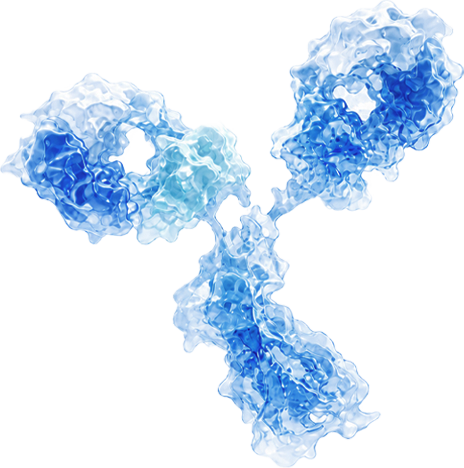
Integrating deep learning with biophysical simulations, SolnAb™ enables de novo generation of antibody sequences directly from antigen epitopes—eliminating the need for animal immunization or library screening. The platform compresses the traditional 2–3 year antibody discovery cycle to 6–12 months, reducing R&D costs by 70%.
-
Precise Generation
Directly designs antibody sequences against target epitopes, bypassing immunization or library screening. -
Efficiency Leap
Shortens R&D timelines to 6–12 months with a 70% cost reduction. -
Intelligent Screening
Employs physical simulations to predict binding efficacy, filtering out invalid candidates early. -
Breaking Bottlenecks
Tackles complex, traditionally undruggable targets, including GPCRs and ion channels. -
End-to-End Closed Loop
Fully automated workflow from sequence design to experimental validation, enabling rapid iteration. -
Global Freedom to Operate
Generates novel sequences via AI, circumventing existing patent barriers.
SolnAb™
Antibody Discovery Platform
SolnAb™
Antibody Discovery Platform
Computational Power-Driven Discovery.
Accelerated Precision in Antibody Development.
Integrating deep learning with biophysical simulations, SolnAb™ enables de novo generation of antibody sequences directly from antigen epitopes—eliminating the need for animal immunization or library screening. The platform compresses the traditional 2–3 year antibody discovery cycle to 6–12 months, reducing R&D costs by 70%.
-
Precise Generation
Directly designs antibody sequences against target epitopes, bypassing immunization or library screening. -
Efficiency Leap
Shortens R&D timelines to 6–12 months with a 70% cost reduction. -
Intelligent Screening
Employs physical simulations to predict binding efficacy, filtering out invalid candidates early. -
Breaking Bottlenecks
Tackles complex, traditionally undruggable targets, including GPCRs and ion channels. -
End-to-End Closed Loop
Fully automated workflow from sequence design to experimental validation, enabling rapid iteration. -
Global Freedom to Operate
Generates novel sequences via AI, circumventing existing patent barriers.
Next-Generation Innovative Biologics Pipeline
Next-Generation
Innovative Biologics Pipeline
Candidate |
Indication |
Drug Design & Screening |
CMC/IIT |
IND |
Phase I/II/III |
NDA |
Commercial Rights |
|---|---|---|---|---|---|---|---|
| Metabolic Disease > | |||||||
| SunRay101Key Component | ActRII Subtype-Selective Monoclonal Antibody | Obesity, Sarcopenia, Heart Failure |
|
 |
||||
| SunRay102Key Component | ActRII/GIPR Bispecific Antibody | Obesity |
|
|
||||
| Neurodegenerative Disease > | |||||||
| SunRay201Key Component | TfR1 Monoclonal Antibody | CNS Diseases (Delivery Vehicle) |
|
|
||||
| SunRay202Key Component | TfR1 + Aβ Bispecific Antibody | Alzheimer's Disease |
|
|
||||
| SunRay203Key Component | TfR1 + Tau Bispecific Antibody | Alzheimer's Disease |
|
|
||||
| SunRay204Key Component | SLC3A2 Monoclonal Antibody | Tumor Immunology |
|
|
||||
| SunRay205Key Component | SLC3A2 + Aβ Bispecific Antibody | Alzheimer's Disease, Tumor |
|
|
||||
| Musculoskeletal Disorders > | |||||||
| SunRay301Key Component | p75NTR Monoclonal Antibody | Osteoarthritis Pain |
|
|
||||
SUNRAY R&D Pipeline
Metabolic Disease
-
SunRay101
ActRII Subtype-Selective Monoclonal Antibody
A subcutaneously administered ActRII subtype-selective monoclonal antibody designed to precisely target the ActRIIA receptor while preserving metabolic homeostasis-related signaling, blocking muscle wasting, and achieving fat loss with muscle preservation.
Mechanism of Action
Precisely targets the ActRIIA receptor with differentiated affinity design from ActRIIB; blocks muscle wasting signaling pathways while preserving metabolic homeostasis-related signals.
Unmet Need
Previous ActRII-targeting drugs have exhibited insufficient selectivity and significant off-target effects; GLP-1-based weight loss results in approximately 40% of body weight reduction coming from muscle mass.
Current Status
PCC candidate molecule optimization phase; half-life extension and low-frequency dosing regimen under refinement; IND-enabling studies in preparation.

-
SunRay102
ActRII/GIPR Bispecific Antibody
A subcutaneously administered ActRII/GIPR bispecific antibody designed to simultaneously block ActRII (promoting muscle growth) and GIPR (inhibiting intramuscular fat accumulation), achieving synergistic fat reduction and muscle gain.
Mechanism of Action
Dual-target synergy—ActRII pathway promotes muscle growth, while GIPR pathway inhibits intramuscular fat accumulation.
Unmet Need
Currently available weight-loss drugs can only reduce weight without "reshaping" the body, and rebound after discontinuation is severe.
Current Status
Molecular design and validation phase; in vitro activity evaluation and in vivo efficacy model validation underway.
Neurodegenerative Disease
-
SunRay201
TfR1 Monoclonal Antibody
A blood-brain barrier-penetrating TfR1 monoclonal antibody that utilizes TfR1-mediated transcytosis to enable macromolecular drug delivery into the brain for CNS diseases.
Mechanism of Action
Targets TfR1 (transferrin receptor), leveraging its high expression on brain capillary endothelial cells to mediate macromolecular drug transport across the blood-brain barrier.
Unmet Need
Over 98% of therapeutic antibodies fail to reach brain lesions, severely constraining CNS drug development.
Current Status
Antibody sequence screening completed; in vitro functional validation and in vivo blood-brain barrier penetration efficiency evaluation underway.
-
SunRay202
TfR1 + Aβ Bispecific Antibody
A blood-brain barrier-penetrating TfR1+Aβ bispecific antibody that efficiently delivers anti-Aβ antibodies into the brain via TfR1-mediated transcytosis for precise clearance of Aβ plaques.
Mechanism of Action
The TfR1 arm is responsible for crossing the blood-brain barrier, while the Aβ arm clears cerebral Aβ plaques, achieving synergistic "brain entry + clearance" dual functionality.
Unmet Need
Previous Aβ antibodies have exhibited low blood-brain barrier penetration, requiring high-dose, high-frequency administration and carrying high ARIA (amyloid-related imaging abnormalities) risk.
Current Status
Bispecific antibody molecular design phase; genetic engineering fusion of TfR1 and Aβ binding arms and expression validation underway.
-
SunRay203
TfR1 + Tau Bispecific Antibody
A blood-brain barrier-penetrating TfR1+Tau bispecific antibody that precisely delivers anti-Tau antibodies to brain lesions via TfR1-mediated transcytosis.
Mechanism of Action
TfR1 mediates active brain entry, delivering anti-Tau antibodies to brain lesions.
Unmet Need
With over 55 million Alzheimer's disease patients worldwide, previous Tau antibodies have faced blood-brain barrier challenges, with over 98% of macromolecular drugs failing to reach the brain.
Current Status
Antibody sequence screening phase; Tau binding arm design and validation underway.
-
SunRay204
SLC3A2 Monoclonal Antibody
A monoclonal antibody targeting SLC3A2, a key subunit of the amino acid transporter complex, intervening in tumor metabolism and immune evasion by blocking amino acid uptake in tumor cells.
Mechanism of Action
Targets SLC3A2 (CD98hc), intervening in tumor metabolic reprogramming and immune evasion.
Unmet Need
The target has a complex structure with difficult epitope recognition, and previous drug development has progressed slowly.
Current Status
Antigen immunization phase; AI-assisted antibody sequence generation and screening underway.
-
SunRay205
SLC3A2 + Aβ Bispecific Antibody
A bispecific antibody targeting both SLC3A2 and Aβ, simultaneously intervening in tumor metabolic reprogramming and Alzheimer's disease pathological progression.
Mechanism of Action
The SLC3A2 arm blocks amino acid uptake in tumor cells, inhibiting tumor growth; the Aβ arm clears cerebral Aβ plaques.
Unmet Need
SLC3A2 target development is challenging, Aβ antibodies face blood-brain barrier penetration difficulties, and no drug currently targets both pathways simultaneously.
Current Status
Bispecific antibody proof-of-concept phase; SLC3A2 antibody screening and Aβ arm design integration underway.
Musculoskeletal Disorders
-
SunRay301
p75NTR Monoclonal Antibody
A monoclonal antibody targeting the p75 neurotrophin receptor, selectively blocking ligand binding of NGF/BDNF to modulate pain signaling and inflammatory responses, providing a non-opioid analgesic solution.
Mechanism of Action
Targets p75NTR, selectively blocking NGF/BDNF ligand binding to modulate pain signaling and inflammatory responses.
Unmet Need
Opioid addiction and resistance; long-term side effects of NSAIDs; NGF antibodies have received black box warnings due to risk of accelerating osteoarthritis progression.
Current Status
Target assessment completed; differentiated development strategy under evaluation, with priority focus on osteoarthritis pain indication.